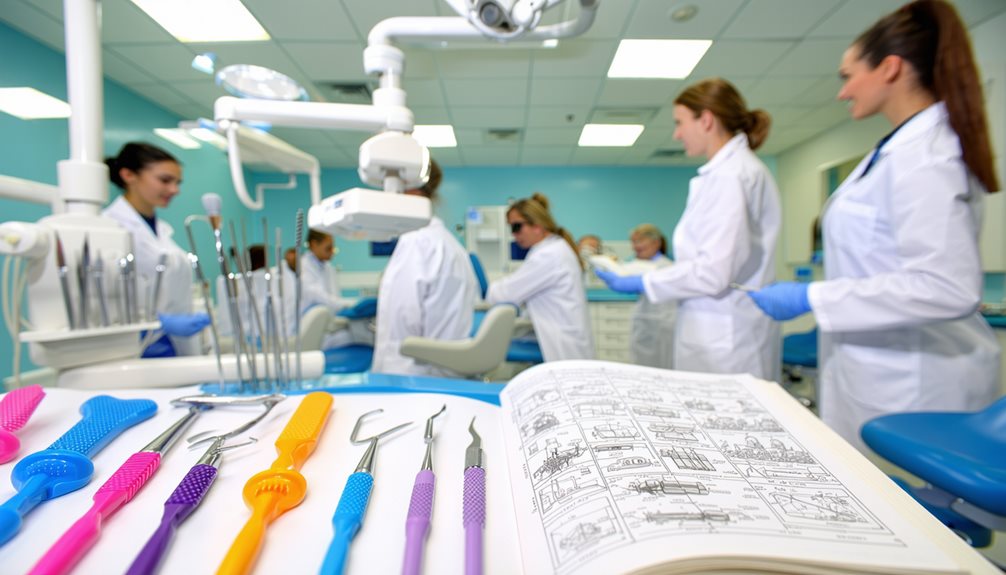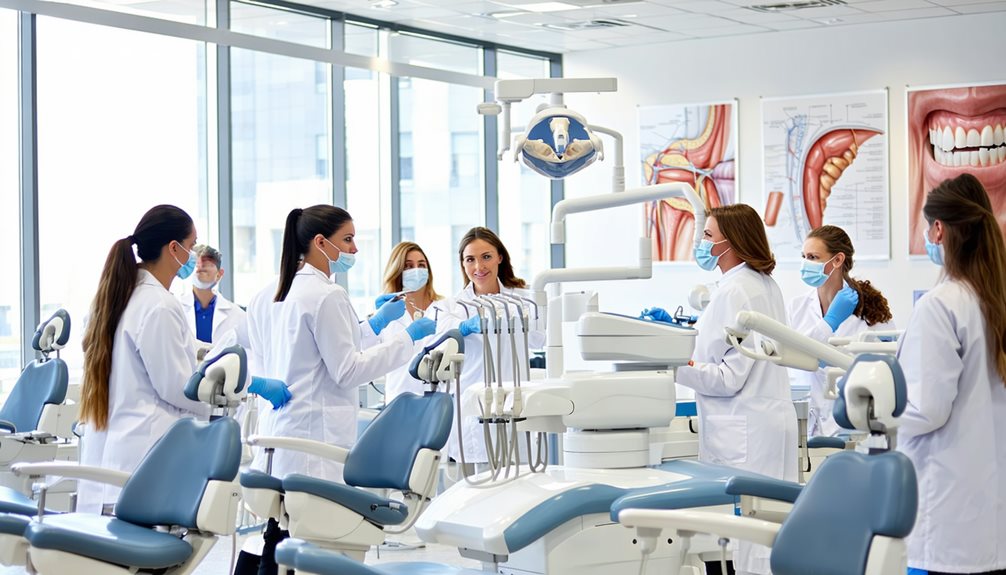
Dental hygiene programs for adults cater to diverse learners by offering flexible and tailored educational options, such as online courses and evening classes, to balance life commitments. Accredited programs guarantee quality through innovative curricula, integrating personal experiences with patient care dynamics. Financial support options like scholarships, grants, and favorable loan terms are available to ease financial burdens. Graduates find opportunities in community health, education, and specialized fields like periodontics or pediatric care. Emphasizing practical experience, these programs prepare students for real-world environments while technological advancements and preventive education enhance patient care. For a thorough understanding, further insights await.
Understanding Non-Traditional Students
Non-traditional students, often characterized by their diverse backgrounds and varied life experiences, play an essential role in adult dental hygiene programs. These individuals bring a wealth of practical knowledge and unique perspectives to the educational environment, enriching the learning experience for all involved.
Adult education in dental hygiene caters to these non-traditional learners by offering flexible scheduling options and tailored curricula designed to accommodate their specific needs and responsibilities. Such programs recognize the importance of integrating prior life experiences into the learning process, allowing students to draw upon their unique insights during their studies.
Non-traditional learners often enter the field with a clear understanding of patient care dynamics, making them well-suited to the empathetic and patient-focused nature of dental hygiene. Their diverse backgrounds foster an innovative approach to problem-solving and patient interaction, contributing markedly to the advancement of dental practices.
Emphasizing experiential learning, adult education programs in dental hygiene are designed to leverage this diversity, crafting an educational experience that not only meets academic standards but also enhances clinical competencies.
Choosing the Right Program
Selecting an appropriate dental hygiene program is a vital step for adults aspiring to enter or advance in the dental field. The journey begins with understanding the significance of program accreditation. Accredited programs meet rigorous standards set by professional accrediting bodies, ensuring that the education provided is both thorough and up-to-date with the latest advancements in dental care. This is paramount for aspiring dental hygienists who seek to provide high-quality patient care grounded in evidence-based practice.
Beyond accreditation, potential candidates must scrutinize course prerequisites. Each program may have different requirements, which can include prior coursework in anatomy, chemistry, and microbiology. These prerequisites are designed to equip students with foundational knowledge essential for mastering the complex curriculum of dental hygiene.
Prospective students should assess their academic backgrounds and consider bridge courses if necessary to meet these requirements.
Furthermore, evaluating the program’s curriculum is essential. Innovative programs often include cutting-edge technologies and methodologies, preparing students to thrive in a rapidly evolving field.
Flexible Learning Options
To accommodate the diverse needs of adult learners, dental hygiene programs increasingly offer flexible learning options such as online courses and evening class scheduling.
Online courses provide accessible, self-paced learning environments that cater to individuals balancing work, family, and education.
Evening classes further enhance flexibility, enabling students to attend in-person sessions without disrupting their daytime commitments.
Online Course Availability
Many dental hygiene programs now offer online course availability, providing flexible learning options for adults seeking to advance their careers or shift into the dental field. These programs leverage innovative online course formats that cater to the unique needs of adult learners, who often balance professional and personal obligations.
Through the integration of virtual classroom benefits, these courses facilitate a dynamic and interactive learning environment, mimicking traditional classroom engagement through digital platforms.
Online course formats in dental hygiene cover a range of subjects, including anatomy, periodontology, and dental materials, guaranteeing a thorough curriculum. These formats often incorporate synchronous and asynchronous components, allowing students to participate in live discussions or access recorded lectures at their convenience.
Virtual classroom benefits extend to interactive modules and simulations, which enhance practical understanding and foster critical thinking skills necessary for clinical applications.
Moreover, online courses provide access to a plethora of resources, including digital libraries, collaborative tools, and expert-led webinars. This accessibility guarantees continuous learning and adaptation to evolving dental practices.
Evening Class Scheduling
Often catering to the demanding schedules of adult learners, evening class scheduling in dental hygiene programs provides a critical component of flexible learning options.
These evening class formats are specifically designed to accommodate the professional and personal commitments of adult students, allowing them to advance their careers without compromising their current responsibilities. This schedule flexibility is crucial for those who may be balancing work, family, and education simultaneously.
The integration of evening classes guarantees that adult learners have access to the same extensive curriculum as their daytime counterparts, covering essential subjects such as oral anatomy, periodontal therapy, and patient care techniques.
Innovative scheduling models may include hybrid formats, combining in-person labs with online lectures to further enhance accessibility and efficiency. Such adaptability not only supports the student’s learning journey but also reflects an understanding of the diverse needs within the adult education community.
For patient-focused outcomes, these programs emphasize hands-on experience, guaranteeing that students are prepared for real-world clinical environments.
Financial Aid for Adults
Maneuvering the landscape of financial aid for adults pursuing dental hygiene programs requires a strategic understanding of the available options and requirements. Scholarship opportunities are crucial for reducing educational costs and are often available through professional associations, educational institutions, and private entities.
These scholarships usually consider factors such as academic performance, community service, and professional aspirations in dental hygiene. Aspiring students should meticulously research each opportunity to identify the most suitable matches for their profiles.
Loan options serve as another essential component for financing education, offering various terms to accommodate diverse financial situations. Federal student loans typically present favorable terms compared to private loans, including lower interest rates and flexible repayment plans.
Adults re-entering education may also qualify for income-driven repayment plans, which align monthly payments with income levels, thereby enhancing affordability.
Furthermore, grants and work-study programs provide additional avenues to alleviate financial burdens, allowing students to focus on acquiring essential skills for patient care. Engaging with financial aid advisors can offer personalized insights into optimizing financial strategies.
Career Opportunities Post-Graduation
Upon completing dental hygiene programs, graduates encounter a wide array of career opportunities across diverse employment settings, including private dental practices, community health centers, and educational institutions.
With experience, dental hygienists can pursue advancement and specialization paths such as roles in dental public health, pediatrics, or research, thereby enhancing patient care through targeted expertise.
This career trajectory not only broadens professional horizons but also contributes to improved oral health outcomes for varied patient populations.
Diverse Employment Settings
Graduates of dental hygiene programs enter a field rich with diverse employment opportunities that extend far beyond the traditional dental practice setting. Among these opportunities, community clinics play a pivotal role.
These clinics offer dental hygienists the chance to contribute greatly to public health initiatives, providing essential oral care services to underserved populations. This setting not only enhances patient care but also allows dental hygienists to engage in preventive education and outreach programs, fostering a community-centric approach to oral health.
Another innovative avenue is corporate dentistry, which is gaining momentum as a dynamic employment setting. Here, dental hygienists can leverage advanced technologies and streamlined processes to deliver efficient and high-quality care.
This environment often emphasizes patient satisfaction and operational excellence, offering dental hygienists the chance to work within multidisciplinary teams and embrace cutting-edge dental practices.
Moreover, dental hygienists can explore roles in educational institutions, where they contribute to shaping future professionals through teaching and research.
They may also find fulfilling careers in public health policy, advocating for systemic changes that improve oral health standards across populations.
These diverse settings empower dental hygienists to apply their expertise in various impactful ways, ultimately enhancing overall patient health outcomes.
Advancement and Specialization Paths
In addition to the diverse employment settings available to dental hygiene graduates, a myriad of advancement and specialization paths offer enriching career prospects post-graduation. For those seeking to deepen their expertise, clinical specialization provides the opportunity to focus on areas such as periodontics, pediatrics, or geriatric care. This allows dental hygienists to tailor their practices to specific patient demographics, thereby enhancing patient outcomes through targeted care strategies.
Pursuing clinical specialization often involves additional coursework and practical experience, fostering a robust skill set that meets the evolving demands of modern dental care.
Advanced certifications further expand professional horizons, signaling a commitment to excellence and innovation in dental hygiene. Certifications such as the Certified Dental Technician (CDT) or the Oral Health Educator credential can open doors to roles in academia, research, and health education, where the impact on community health can be profound.
Additionally, leadership positions in dental practices and organizations often require such credentials, underscoring their value in career progression. By embracing these advancement and specialization paths, dental hygienists not only enhance their own careers but also contribute to the advancement of oral health practices, ensuring thorough patient care.
Tips for Balancing Life and Study
Successfully balancing the demands of life and study is vital for adults enrolled in dental hygiene programs, as it guarantees both academic success and personal well-being. Effective time management is pivotal in achieving this balance. By creating a structured schedule, individuals can allocate specific time blocks dedicated to coursework, clinical practice, and personal commitments.
Innovative digital tools such as calendar applications and task management software can streamline this process, allowing for real-time adjustments and reminders. In addition, prioritizing tasks based on urgency and importance can prevent last-minute stressors, enabling a more focused and efficient study approach.
Stress reduction techniques are equally important for maintaining equilibrium between academic and personal responsibilities. Engaging in mindfulness practices, such as meditation or deep-breathing exercises, can alleviate stress and enhance concentration. Regular physical activity, even in short intervals, can also boost mental clarity and stamina.
Additionally, fostering a support network with peers and mentors within the dental hygiene community can provide emotional support and practical advice, encouraging resilience and adaptability.
Ultimately, integrating these strategies not only enhances one’s capability to manage life and study but also cultivates a proactive mindset, vital for thriving in the dynamic field of dental hygiene.
Frequently Asked Questions
What Are the Prerequisites for Enrolling in a Dental Hygiene Program?
The admissions requirements for dental hygiene programs typically encompass specific academic qualifications, including a high school diploma or GED, prerequisite coursework in sciences, and a satisfactory GPA. Emphasizing patient care and technical skills fosters innovation and enhances professional development.
How Long Does It Typically Take to Complete a Dental Hygiene Program?
Program duration for dental hygiene programs typically ranges from two to four years, depending on degree options. Associate degrees generally take two years, while bachelor’s programs extend to four years, offering extensive knowledge and innovative patient-focused skills.
Are There Any Online Resources Available for Dental Hygiene Students?
Dental hygiene students can access numerous online courses and virtual workshops designed to enhance their technical knowledge and patient care skills. These resources offer innovative, flexible learning opportunities, allowing students to stay updated with the latest industry advancements.
What Types of Continuing Education Opportunities Are Available for Dental Hygienists?
Continuing education for dental hygienists includes advanced certifications and professional workshops. These opportunities enhance technical knowledge, emphasizing detail-oriented practices and patient-focused care, while fostering innovation in clinical techniques and expanding expertise in specialized areas of dental hygiene.
How Can I Gain Hands-On Experience While Studying Dental Hygiene?
To gain hands-on experience while studying dental hygiene, engage in clinical internships to apply theoretical knowledge in practical settings. Additionally, volunteer opportunities provide invaluable patient-focused experiences, fostering technical proficiency and innovative approaches in real-world dental care environments.
Conclusion
In summary, dental hygiene programs for adults cater to non-traditional students by providing flexible learning options and financial aid opportunities. These programs equip students with the necessary skills and knowledge to pursue diverse career paths in the dental field. Understanding the unique challenges faced by adult learners, such as balancing life and study, is essential for success. By selecting the appropriate program, adult learners can achieve their educational and professional goals in dental hygiene.