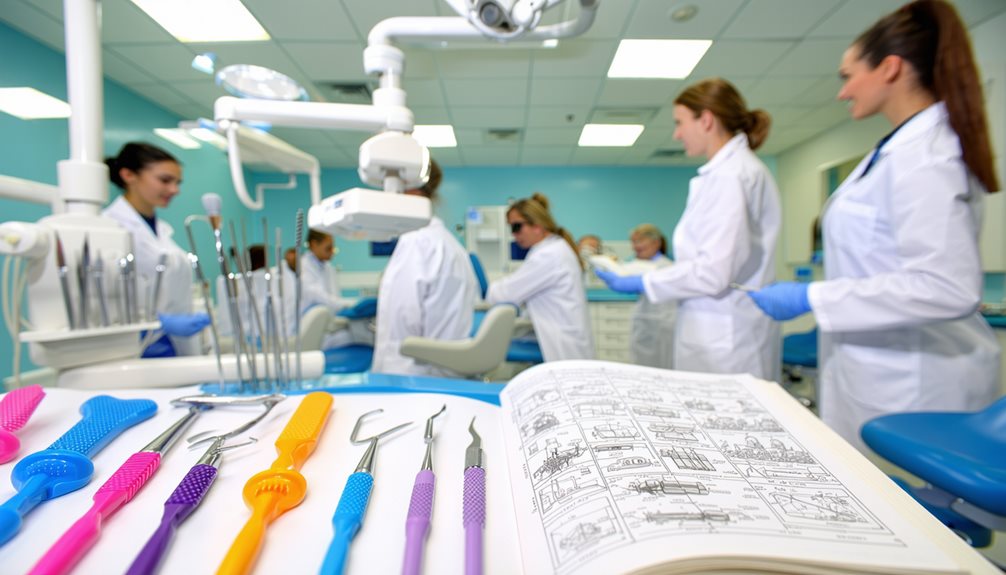
Selecting the best dental hygiene program requires careful scrutiny of accreditation and curriculum. Verify the program is CODA-accredited to guarantee educational standards and patient safety. Examine the curriculum for evidence-based content and faculty expertise. Clinical experience is vital; seek programs offering diverse, hands-on training with advanced technology. Evaluate program reputation by considering licensure pass rates and graduate employment success. These factors point toward a program’s commitment to cultivating proficient professionals ready for the dental field. By focusing on these core aspects, aspiring dental hygienists can feel confident in their educational choice, knowing further insights await those who explore deeper.
Evaluate Accreditation and Curriculum
When evaluating dental hygiene programs, examining their accreditation status and curriculum is essential for prospective students. Accreditation guarantees that the program meets rigorous educational standards, which is important for both patient safety and professional credibility. The Commission on Dental Accreditation (CODA) is a key body that evaluates these programs, and its endorsement is a hallmark of quality education.
A robust curriculum, grounded in innovation and evidence-based practices, is significant for developing the clinical acumen and technical skills needed in the ever-evolving field of dental hygiene. Prospective students should meticulously review course prerequisites to confirm alignment with their educational background and career aspirations. These prerequisites often include foundational courses in biology and chemistry, which are critical for understanding complex dental concepts.
Faculty qualifications are another important component; seasoned educators with extensive clinical experience and advanced degrees can provide invaluable insights and mentorship. Faculty with ongoing research involvement or professional affiliations often bring a fresh, innovative perspective to the classroom, fostering an environment that encourages critical thinking and continuous learning.
Consider Clinical Experience Opportunities
Evaluating accreditation and curriculum provides a foundation for selecting a quality dental hygiene program, yet it is equally important to assess the clinical experience opportunities offered. Clinical placements are a critical component of dental hygiene education, bridging the gap between theoretical knowledge and practical application. Programs offering diverse and thorough hands-on training guarantee that students gain proficiency in various dental procedures and patient care techniques, which are indispensable for career readiness.
Innovative programs often collaborate with a variety of dental practices, community health centers, and specialty clinics to provide students with exposure to a wide range of clinical settings. This diversity in experiential learning cultivates adaptability and enhances students’ competence in addressing multifaceted patient needs.
Additionally, programs that integrate cutting-edge dental technology into their clinical training can greatly enhance the learning experience, preparing students for future advancements in the field.
Ultimately, selecting a program with robust clinical experience opportunities not only fortifies technical skills but also nurtures critical thinking and problem-solving abilities. These attributes are essential for dental hygienists who aim to excel in an ever-evolving healthcare landscape, guaranteeing they are well-equipped to deliver exceptional patient care in their professional endeavors.
Assess Program Reputation and Success Rates
A program’s reputation and success rates serve as critical indicators of its quality and effectiveness in preparing students for careers in dental hygiene. Evaluating these factors involves a detailed analysis of program rankings, which often reflect the institution’s commitment to academic excellence and innovative teaching methodologies. High-ranking programs typically maintain rigorous standards, ensuring that students receive a thorough education that is both current and relevant to evolving dental practices.
Graduate testimonials provide invaluable insights into the real-world applicability of the education received. These first-hand accounts offer a vivid picture of how well the program equips its graduates with the skills and knowledge necessary for successful dental hygiene careers. Positive testimonials often highlight a program’s strengths, such as access to state-of-the-art facilities, supportive faculty, and a curriculum that emphasizes evidence-based practices.
Furthermore, examining a program’s success rates, including licensure examination pass rates and employment rates post-graduation, is essential. High success rates are indicative of a program’s effectiveness in fostering competent dental hygienists who are ready to meet the demands of the healthcare industry.
When choosing a dental hygiene program, prospective students should prioritize those with strong reputations and proven success in producing skilled professionals.
Frequently Asked Questions
What Are the Costs Associated With Dental Hygiene Programs?
The costs associated with dental hygiene programs include tuition rates, which vary considerably across institutions. Program comparisons are essential for evaluating value, factoring in additional expenses like textbooks, lab fees, and clinical equipment, ensuring informed, patient-focused, innovative educational choices.
Are There Online Dental Hygiene Programs Available?
Online dental hygiene programs are available, offering flexible learning options. Prospective students should prioritize program accreditation, ensuring quality education. Utilizing online resources enhances learning, fostering innovation in patient care and aligning with evolving dental hygiene industry standards.
What Are the Prerequisites for Enrolling in a Dental Hygiene Program?
Admission requirements for dental hygiene programs typically include prerequisite courses in biology and chemistry, completion of standardized tests, and relevant dental hygiene certifications. Prospective students should consult specific program guidelines to guarantee compliance with all necessary criteria for enrollment.
How Long Does It Typically Take to Complete a Dental Hygiene Program?
The program duration for dental hygiene education typically spans two to three years. This completion timeline includes thorough coursework, clinical practice, and patient-focused training, equipping students with innovative skills essential for modern dental health care.
What Kind of Financial Aid Is Available for Dental Hygiene Students?
Dental hygiene students can access various financial aid options, including scholarship opportunities tailored for healthcare disciplines and government grants designed to support educational advancement. These resources facilitate professional development and innovation within the dental hygiene sector.
Conclusion
In summary, selecting a superior dental hygiene program necessitates a thorough evaluation of accreditation and curriculum to guarantee rigorous academic standards. Clinical experience opportunities should be prioritized, as they provide essential hands-on training pivotal for skill development. Additionally, evaluating the program’s reputation and success rates offers insights into the quality of education and graduate outcomes. By focusing on these critical factors, prospective students can make informed decisions that align with professional aspirations and contribute to exceptional patient care.