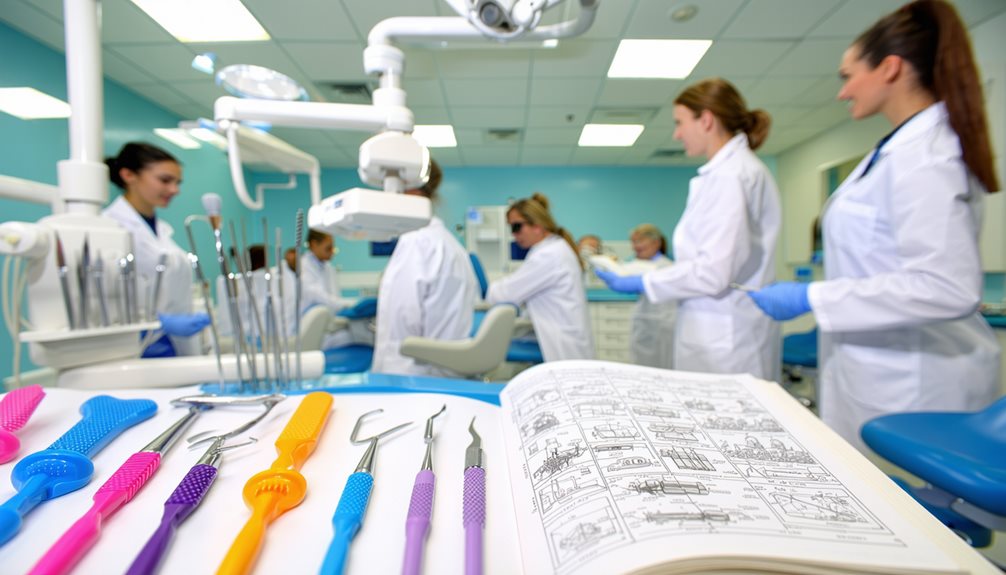
Pursuing continuing education in dental hygiene is pivotal for refining clinical skills and enhancing patient care. It allows for mastery of advanced topics like periodontal therapy and adoption of the latest technologies, thereby improving diagnostic accuracy and treatment outcomes. Staying informed about evolving regulations and best practices guarantees compliance and elevates care quality. Such education also broadens career prospects, enabling diversification into roles such as educators and researchers. It fosters professional confidence and strengthens communication with patients. Additionally, ongoing learning connects professionals with industry experts, enabling shared knowledge and career advancement. Discover more about the impact of continuing education.
Enhancing Clinical Skills
The pursuit of mastery in clinical skills is a cornerstone of continuing education in dental hygiene. As the landscape of dental care continually evolves, practitioners must remain adept at integrating new techniques and technologies into their clinical practice. This ongoing commitment to skill refinement not only enhances the quality of care provided but also guarantees that dental hygienists are equipped to meet the unique needs of their patients effectively.
Incorporating cutting-edge methods into one’s clinical practice requires a dedication to learning and the ability to adapt swiftly. Continuing education courses offer dental hygienists the opportunity to explore advanced topics such as periodontal therapy, pain management, and patient education strategies. These courses are designed to reinforce existing skills while introducing innovative approaches that can be seamlessly integrated into day-to-day practice.
Moreover, refining clinical skills through targeted education allows practitioners to remain competitive in a rapidly advancing field. By staying informed about the latest developments and honing their expertise, dental hygienists can provide a higher standard of care that is both thorough and patient-focused.
Ultimately, the pursuit of excellence in clinical skills translates into better patient outcomes, fostering trust and satisfaction in the dental hygiene profession.
Staying Updated With Regulations
As the regulatory environment in healthcare continuously evolves, understanding and adhering to these regulations is paramount for dental hygienists to maintain compliance and assure patient safety.
The dynamic nature of regulatory changes necessitates ongoing education to keep abreast of new guidelines that impact clinical practice. Dental professionals must be vigilant in their pursuit of compliance updates to make certain that their practices meet the latest standards and legal requirements.
Continuing education serves as a critical conduit for dental hygienists to gain insights into regulatory changes, which can include updates to infection control protocols, patient privacy laws, and documentation practices.
By staying informed, dental hygienists can adapt their workflows to align with current best practices, thereby enhancing the quality of care they provide.
Additionally, being proactive in understanding compliance updates not only safeguards the practice from potential legal ramifications but also reinforces the trust and confidence of patients.
As patients become increasingly informed about healthcare standards, dental hygienists who can demonstrate a commitment to regulatory adherence position themselves as leaders in patient-centric care.
This forward-thinking approach not only upholds professional integrity but also fosters an environment of innovation and excellence in dental hygiene.
Expanding Career Opportunities
In today’s ever-evolving healthcare landscape, dental hygienists find themselves at the forefront of expanding career opportunities that extend well beyond traditional clinical roles. As the dental field progresses with technological advancements and holistic approaches to patient care, the demand for dental professionals with specialized knowledge and skills is increasing.
Continuing education serves as a pivotal gateway to career advancement, enabling dental hygienists to diversify their expertise and shift into roles such as educators, researchers, public health advocates, and corporate consultants.
The current job market reflects a growing need for hygienists who can contribute to interdisciplinary healthcare teams, participate in policy development, and lead community health initiatives. By pursuing further education, dental hygienists can capitalize on these opportunities, enhancing their professional profiles and opening doors to higher-level positions.
Furthermore, expanded skill sets allow them to stay competitive and adaptable, addressing the dynamic needs of the industry.
Ultimately, continuing education empowers dental hygienists to play a more integral role in shaping the future of oral healthcare. As the scope of practice broadens, these professionals are well-equipped to assume leadership positions and influence the trajectory of dental hygiene, ensuring they remain invaluable assets within the healthcare system.
Improving Patient Care
Continuing education in dental hygiene is pivotal for enhancing clinical techniques, ensuring that practitioners are equipped with the latest skills to provide superior patient care.
By adopting the latest technologies, dental hygienists can offer more accurate diagnoses and effective treatments, greatly improving patient outcomes.
This commitment to lifelong learning not only elevates the standard of care but also fosters a trusting relationship between patients and their healthcare providers.
Enhancing Clinical Techniques
Enhancing clinical techniques in dental hygiene is crucial for advancing patient care and guaranteeing ideal oral health outcomes. By embracing advanced techniques, dental hygienists are better equipped to address complex oral health issues, offering patients extensive and individualized care.
Continuing education plays a significant role in this evolution, allowing practitioners to refine and expand their skill sets through practical applications that directly benefit their patients.
Advanced techniques in dental hygiene encompass a broad spectrum of clinical skills, from optimizing periodontal therapies to mastering the nuances of patient assessment and risk management. These skills are not only essential for effective treatment but also for fostering patient trust and compliance.
By understanding and applying these techniques, hygienists can provide more precise and minimally invasive care, reducing patient discomfort and enhancing overall treatment success.
Practical applications of advanced techniques guarantee that dental hygienists remain at the forefront of patient care. For instance, proficiency in scaling and root planing can be improved through hands-on courses that demonstrate the latest best practices.
Such educational opportunities empower practitioners to deliver exceptional care, ultimately contributing to improved patient outcomes and satisfaction. As the field of dental hygiene continues to evolve, ongoing education in clinical techniques remains irreplaceable.
Adopting Latest Technologies
As dental hygienists refine their clinical techniques, integrating the latest technologies becomes increasingly essential in elevating patient care. The adoption of digital tools such as intraoral scanners and laser therapy devices not only streamlines the diagnostic process but also enhances the precision and efficiency of treatments. These innovations facilitate a more thorough examination of oral health, allowing for early detection and intervention of potential issues. Implementing innovative techniques guarantees that patients receive the most advanced care available, fostering improved outcomes and satisfaction.
Digital radiography, for instance, offers high-resolution images with reduced radiation exposure, supporting a safer and more effective diagnostic process. By embracing these technological advancements, dental hygienists can provide precise charting and analysis, strengthening treatment planning and execution.
In addition, the use of computer-aided design and manufacturing (CAD/CAM) systems in dental restorations enhances the quality and fit of prosthetics, optimizing patient experiences.
Continuing education in these areas is vital for staying updated with emerging technologies and learning how to incorporate them seamlessly into clinical practice. Remaining at the forefront of such advancements not only empowers dental hygienists to deliver superior care but also positions them as leaders in the ever-evolving field of oral health.
Boosting Professional Confidence
Confidence forms the backbone of effective dental hygiene practice, empowering professionals to deliver exceptional patient care with assurance and competence. Continuing education plays a vital role in bolstering this confidence, offering practitioners numerous self-assurance techniques to refine their skills and stay abreast of advancements. By engaging in ongoing learning opportunities, dental hygienists can systematically enhance their proficiency, leading to increased confidence in clinical decision-making and patient interactions.
Confidence building in dental hygiene is intrinsically tied to the mastery of new techniques and technologies. As the dental field rapidly evolves, professionals who participate in continued education are better equipped to implement innovative solutions, thereby increasing their self-efficacy. This ongoing development not only fuels personal growth but also guarantees that practitioners remain at the forefront of industry standards, providing care that is both cutting-edge and compassionate.
Furthermore, confidence in dental hygiene is essential when addressing patient concerns and promoting oral health education. With a solid foundation of knowledge gained from continuous learning, dental hygienists can communicate more effectively and tailor their approach to meet individual patient needs.
This patient-focused strategy not only strengthens the practitioner-patient relationship but also enhances overall treatment outcomes, reinforcing the importance of confidence in clinical practice.
Networking With Industry Experts
Engaging with industry experts is essential for dental hygienists seeking to build professional relationships that can enhance clinical practice and improve patient outcomes.
By accessing expert knowledge, practitioners can stay informed about the latest advancements in dental care, ensuring they provide the highest standard of treatment.
Additionally, these connections can expand career opportunities by opening doors to mentorship, collaborations, and roles that align with one’s professional aspirations.
Building Professional Relationships
Networking with industry experts is a critical component of advancing one’s career in dental hygiene, often leading to enhanced professional development and patient care. Establishing and nurturing professional relationships with seasoned practitioners and thought leaders in the field opens doors to mentorship opportunities, which are invaluable for career growth.
These relationships provide guidance and insights that help dental hygienists refine their clinical skills and stay abreast of emerging innovations in patient care.
Furthermore, engaging in collaboration initiatives with industry experts fosters an environment of shared learning and innovation. Such collaborations can lead to the development of cutting-edge practices and techniques that improve patient outcomes and elevate the standards of care within the dental hygiene community.
By participating in professional organizations, conferences, and workshops, dental hygienists can connect with peers and leaders who share a commitment to excellence in the field.
Building a robust professional network also enhances one’s ability to contribute to interdisciplinary teams, thereby expanding the scope of practice and influence.
In an industry that is constantly evolving, these relationships are not merely advantageous—they are essential for those who wish to lead the way in shaping the future of dental hygiene.
Accessing Expert Knowledge
In the ever-evolving field of dental hygiene, securing access to expert knowledge is essential for maintaining clinical excellence and delivering superior patient care. Networking with industry experts serves as a conduit to the latest research advancements and the application of advanced techniques. By engaging with thought leaders, dental hygienists can stay abreast of cutting-edge developments that define the future of oral health care.
Conferences, workshops, and seminars provide invaluable platforms for direct interaction with pioneers in dental research and clinical practice. These events not only introduce new methodologies but also facilitate the exchange of innovative ideas that can be applied in daily practice. By discussing complex cases and exploring emerging technologies, dental professionals can enhance their diagnostic and therapeutic skills.
Furthermore, participation in professional organizations and online forums fosters a community of continuous learning. These networks offer access to peer-reviewed journals, webinars, and discussion groups focused on the latest trends and best practices.
Expanding Career Opportunities
Broadening one’s professional network can greatly expand career opportunities in dental hygiene. By engaging with industry experts, dental hygienists can gain insights into emerging trends, innovative technologies, and advanced methodologies that are reshaping the field.
This proactive approach not only enhances clinical knowledge but also positions professionals strategically within a competitive job market. Networking serves as a gateway to career advancement, providing access to mentorships, collaborative projects, and potential job openings.
Here are three key benefits of networking with industry experts:
-
Mentorship and Guidance: Establishing relationships with seasoned professionals can offer invaluable career guidance, helping one navigate complex clinical scenarios and make informed decisions about career paths.
-
Access to Cutting-Edge Knowledge****: Industry experts often have firsthand information about the latest advancements in dental hygiene practices. This access allows hygienists to stay ahead of changes and adapt quickly, enhancing their appeal in the job market.
-
Increased Career Opportunities: Networking can lead to introductions to potential employers or collaborators, opening doors to roles that may not be advertised publicly. Such connections are vital for those seeking career advancement and specialization within the field.
Frequently Asked Questions
What Financial Aid Options Are Available for Continuing Education in Dental Hygiene?
Scholarship opportunities and loan options are available for dental hygiene continuing education. These financial aids facilitate access to advanced learning, ensuring dental professionals remain clinically knowledgeable and innovative, ultimately enhancing patient care and improving career prospects.
How Does Continuing Education Impact Dental Hygienist Salaries?
Continuing education greatly influences salary growth for dental hygienists by enhancing clinical expertise, staying abreast of innovative practices, and improving patient care. Advanced credentials often lead to lucrative opportunities, driving professional advancement and increased earning potential.
Are There Online Courses for Dental Hygiene Continuing Education?
Yes, dental hygienists can access online certifications and virtual workshops to fulfill continuing education requirements. These innovative platforms offer clinically relevant content, enhancing patient care while accommodating flexible schedules for professionals seeking to advance their knowledge and skills.
How Can I Balance Work and Continuing Education Effectively?
Balancing work and continuing education necessitates effective time management and advanced study techniques. Prioritize tasks, utilize digital tools for organization, and adopt flexible learning strategies to seamlessly integrate professional development while maintaining a high standard of patient care.
What Are the Prerequisites for Enrolling in Advanced Dental Hygiene Courses?
Advanced dental hygiene courses often necessitate specific course requirements, including foundational knowledge in oral health sciences. The application process typically involves submitting transcripts, proof of licensure, and professional recommendations, ensuring candidates are clinically proficient and patient-focused, fostering innovative practices.
Conclusion
Continuing education in dental hygiene greatly enhances clinical skills, ensuring practitioners remain adept in the latest techniques and technologies. It facilitates compliance with evolving regulations, thereby safeguarding both professionals and patients. By expanding career opportunities, it allows practitioners to explore diverse roles within the field. Improved patient care results from updated knowledge and skills, leading to better health outcomes. Additionally, it boosts professional confidence and enables valuable networking with industry experts, fostering a collaborative and informed dental community.