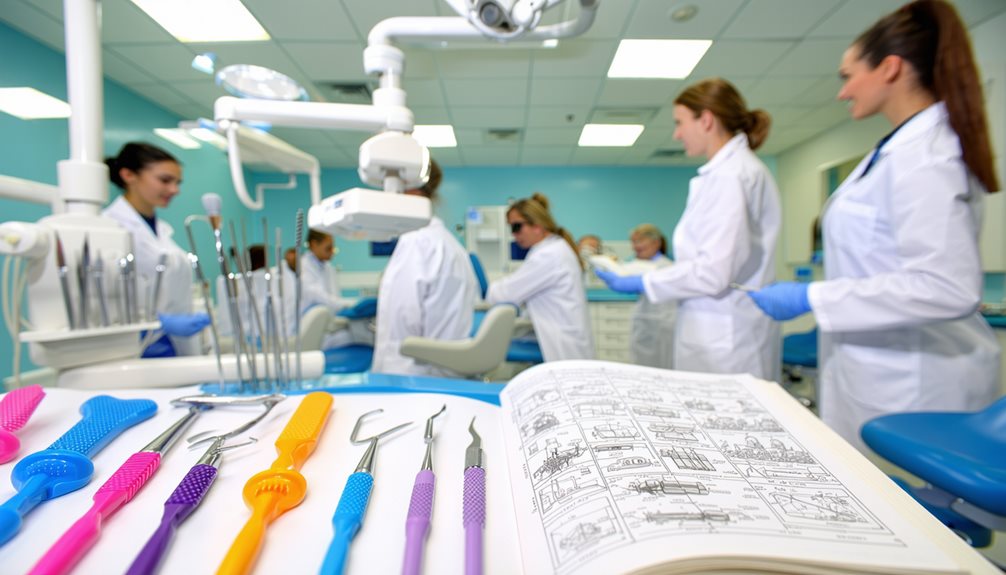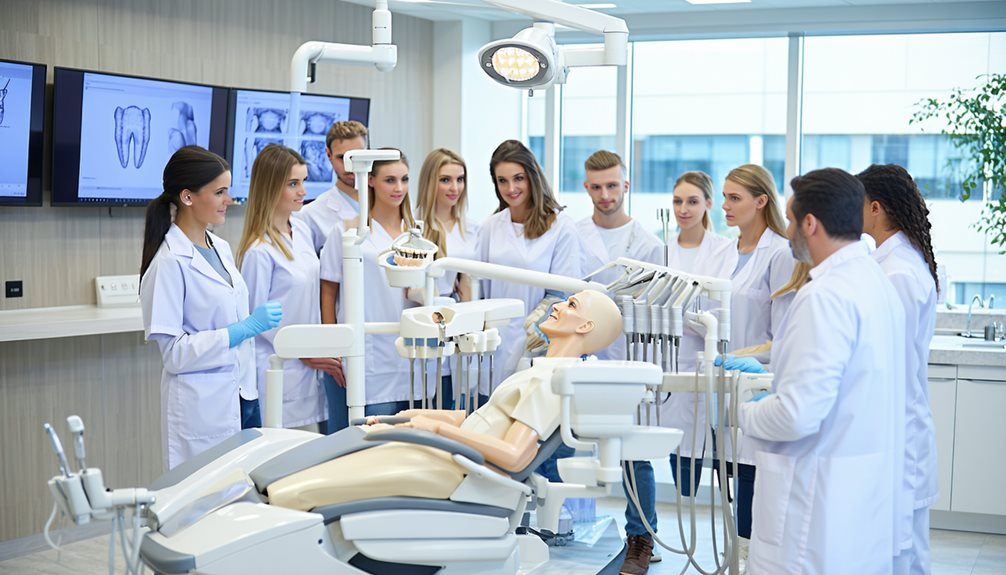
Advanced dental hygiene education programs are essential for dental practitioners aiming to refine their clinical skills and leadership acumen. Online Master’s programs, known for their accredited curriculums, offer flexibility and emphasize clinical proficiency and patient-focused care. Innovative teaching strategies like the flipped classroom model enhance student engagement and critical thinking, while experiential learning fosters hands-on clinical experiences. Courses in clinical practice advancement, research-focused studies, and public health specializations further support professional growth, ensuring graduates are well-prepared to deliver high-standard care. For those committed to excelling in dental hygiene, exploring these programs offers invaluable insights.
Online Master’s Programs
Online Master’s Programs in dental hygiene offer advanced educational opportunities for dental professionals looking to enhance their clinical expertise and leadership skills.
These programs provide a rigorous curriculum through online learning platforms, allowing clinicians to balance their professional responsibilities while pursuing higher education. With a strong emphasis on evidence-based practice, these programs are designed to cultivate critical thinking and foster innovation in dental hygiene practice.
Accreditation is a pivotal element of these programs, ensuring that the educational standards meet the professional requirements necessary for advanced practice. Program accreditation guarantees that the curriculum is extensive and aligns with the latest advancements in dental science and technology. This assurance is essential for dental hygienists seeking to expand their scope of practice and assume roles in academia, research, or healthcare management.
Online learning facilitates a flexible and accessible educational experience, enabling dental professionals to engage with cutting-edge content from a distance. The integration of interactive modules, virtual simulations, and collaborative forums enhances the learning process, fostering a dynamic environment that encourages innovation and professional growth.
Clinical Practice Enhancement
Building upon the foundational knowledge acquired through advanced online master’s programs, clinical practice enhancement focuses on the direct application of these skills within patient care settings. This stage is pivotal for dental hygienists aspiring to elevate their clinical skills and foster greater patient engagement.
By utilizing cutting-edge techniques and evidence-based practices, hygienists can refine their approach to patient care, ensuring optimal health outcomes and satisfaction.
A thorough enhancement of clinical practice encompasses several key areas:
-
Advanced Assessment Techniques: Employing state-of-the-art diagnostic tools and methodologies to accurately assess oral health conditions, enabling tailored treatment plans.
-
Patient-Centric Communication: Developing strategies to effectively communicate complex information, thereby improving patient understanding and compliance with oral health regimes.
-
Innovative Treatment Approaches: Integrating the latest advancements in dental technology, such as laser therapies and digital imaging, to enhance the precision and efficacy of treatments.
-
Interdisciplinary Collaboration: Collaborating with dental specialists and other healthcare professionals to provide holistic care, addressing broad health needs beyond oral hygiene.
Through these enhancements, dental hygienists are well-equipped to meet the increasing demands of modern dental care environments.
Research-Focused Studies
Research-focused studies within dental hygiene education programs are pivotal in advancing patient care through innovative research methodologies.
These studies not only enhance evidence-based practice but also foster interdisciplinary collaboration opportunities, allowing for thorough approaches to oral health challenges.
Innovative Research Methodologies
Amidst the evolving landscape of dental hygiene education, innovative research methodologies have emerged as pivotal tools in advancing the field. These approaches are integral in fostering an environment where evidence-based practices thrive, ensuring ideal patient care. Through a blend of qualitative analysis and quantitative research, dental hygiene programs are poised to address complex clinical questions and improve patient outcomes.
-
Qualitative Analysis: This methodology explores patient experiences, providing insights into the socio-behavioral aspects of oral health. By understanding patient perspectives, dental hygienists can tailor interventions to meet individual needs effectively.
-
Quantitative Research: Employing statistical methods, this approach offers a robust framework for evaluating the efficacy of various dental hygiene interventions. It allows for precise measurement of variables, fostering data-driven decision-making in clinical settings.
-
Mixed-Methods Approach: Combining qualitative and quantitative techniques, this approach provides a thorough understanding of multifaceted issues in dental hygiene. It enables the integration of diverse data sources to inform holistic care strategies.
-
Technological Integration: Utilizing cutting-edge tools like digital imaging and data analytics, innovative research methodologies enhance diagnostic accuracy and treatment planning, ultimately elevating the standard of patient care in dental hygiene practices.
Such methodologies are instrumental in shaping the future of dental hygiene, ensuring that practitioners remain at the forefront of clinical excellence and innovation.
Interdisciplinary Collaboration Opportunities
As innovative research methodologies continue to advance dental hygiene education, the potential for interdisciplinary collaboration becomes increasingly significant. This collaboration is essential in fostering a thorough understanding of oral health within the broader healthcare spectrum.
Engaging in team-based approaches allows dental hygiene professionals to integrate with other healthcare disciplines, enhancing patient outcomes through a holistic care model. This integration emphasizes the importance of shared resources, enabling access to diverse expertise and cutting-edge technologies.
In research-focused studies, interdisciplinary collaboration provides a platform for dental hygienists to contribute unique insights into systemic health connections, such as the link between periodontal disease and cardiovascular conditions. By working alongside cardiologists, endocrinologists, and other specialists, dental hygiene researchers can develop more effective prevention and treatment strategies, ultimately benefiting patients through improved health outcomes.
Furthermore, these collaborative efforts support the development of innovative educational programs that prepare future dental hygienists to thrive in multidisciplinary environments.
Leadership and Education Tracks
Leadership and education tracks within dental hygiene programs are essential for cultivating the next generation of dental leaders.
By implementing innovative teaching strategies, these programs aim to enhance the clinical competencies and leadership skills of future dental hygienists.
This focus ultimately benefits patient care by ensuring that emerging professionals are well-equipped to lead and adapt within the evolving landscape of oral health care.
Developing Future Dental Leaders
In the ever-evolving field of dental care, the cultivation of future dental leaders is paramount to advancing patient outcomes and clinical practices. Advanced dental hygiene education programs are instrumental in fostering leadership capabilities among practitioners. These programs are designed to equip dental hygienists with the skills necessary to lead in both clinical and academic settings.
Key components include:
-
Mentorship Programs: These facilitate knowledge transfer and professional growth, enabling emerging leaders to gain insights from seasoned practitioners.
-
Leadership Workshops: Tailored to enhance strategic thinking, communication, and decision-making skills, these workshops prepare dental hygienists to navigate complex healthcare environments effectively.
-
Interdisciplinary Collaboration: By promoting teamwork across various healthcare domains, these programs guarantee a holistic approach to patient care and innovation in treatment methodologies.
-
Research and Development Opportunities: Encouraging participation in cutting-edge research initiatives allows dental professionals to contribute to advancements in oral health science.
These elements collectively aim to create a cadre of dental leaders who are adept at addressing contemporary challenges in dental hygiene.
Innovative Teaching Strategies
The integration of innovative teaching strategies within dental hygiene education programs is pivotal for cultivating the next generation of leaders and educators. Embracing methods such as the flipped classroom and experiential learning enhances the educational experience by actively involving students in the learning process.
In the flipped classroom model, traditional lectures are replaced with interactive discussions, allowing students to digest material at their own pace and apply critical thinking skills during in-class activities. This approach fosters a deeper understanding of complex dental hygiene concepts and sharpens problem-solving abilities.
Experiential learning, on the other hand, emphasizes hands-on experiences that simulate real-world scenarios. This strategy is particularly effective in dental hygiene education, where clinical proficiency and patient-centered care are paramount.
By engaging in practical exercises and clinical rotations, students gain confidence and expertise in delivering high-quality oral health care. These experiences not only prepare students for clinical challenges but also instill leadership qualities essential for future educators and leaders in the field.
Incorporating these innovative methodologies guarantees that dental hygiene graduates are well-prepared to meet the evolving demands of the profession, ultimately improving patient outcomes and advancing the field of dental hygiene.
Public Health Specializations
Public health specializations within dental hygiene education programs play a critical role in equipping students with the necessary skills to address community oral health needs effectively. By focusing on community outreach and preventive care, these programs are pivotal in advancing public health initiatives. Graduates are trained to implement strategic interventions that promote oral health literacy and reduce the prevalence of dental diseases in underserved populations.
Key components of public health specializations include:
-
Community Outreach Programs: These initiatives enable students to engage directly with diverse populations, fostering both empathy and cultural competence. They learn to tailor educational materials to meet specific community needs, ensuring impactful health promotion.
-
Preventive Care Strategies: Emphasizing the importance of early detection and disease prevention, students are taught evidence-based techniques to minimize the incidence of oral health issues. This includes the application of fluoride treatments and the promotion of healthy oral hygiene practices.
-
Health Policy and Advocacy: Understanding the intricacies of health policy allows students to advocate for systemic changes that improve access to dental care resources, hence contributing to broader public health objectives.
-
Data Analysis and Research: By analyzing epidemiological data, students identify trends in oral health and develop targeted interventions, ultimately enhancing community health outcomes through data-driven solutions.
These specializations prepare dental hygienists to be leaders in public health, driving innovation in community oral care.
Interdisciplinary Collaborations
Interdisciplinary collaborations within dental hygiene education programs markedly enhance the scope and effectiveness of public health initiatives. By integrating disciplines such as nutrition, nursing, and social work, these programs foster a thorough approach to oral health care that is both innovative and patient-centric. Collaborative projects facilitate the exchange of knowledge and skills among various healthcare professionals, resulting in a more holistic understanding of patient needs.
Team-based learning environments are central to these interdisciplinary efforts, encouraging dental hygiene students to engage with peers from diverse healthcare backgrounds. This approach not only broadens their clinical expertise but also equips them with the necessary tools to navigate complex healthcare systems.
By participating in team-based learning, students develop competencies in communication, problem-solving, and critical thinking, all of which are essential for the delivery of integrated care.
Moreover, such collaborations underscore the importance of preventive care strategies and the social determinants of health, allowing future dental hygienists to address patient needs more effectively.
As the demand for innovative and thorough healthcare solutions grows, interdisciplinary collaborations within advanced dental hygiene education programs stand as a demonstration of progressive, patient-focused education, ensuring graduates are well-prepared to contribute to dynamic healthcare teams.
Frequently Asked Questions
What Is the Average Duration of Advanced Dental Hygiene Programs?
The average program duration for advanced dental hygiene education typically spans 18 to 24 months. Curriculum structure emphasizes thorough clinical expertise, integrating innovative methodologies, and precise terminology to enhance patient-focused care and promote professional growth in dental hygiene practices.
Are There Scholarships Available for These Advanced Programs?
Scholarship opportunities and funding resources are often available for advanced dental hygiene programs, facilitating access for aspiring professionals. Prospective students are encouraged to explore institutional, private, and governmental options to support their educational endeavors and foster career innovation.
How Do I Choose the Right Program for My Career Goals?
To select the ideal program for your career goals, evaluate program features that emphasize clinical expertise and innovation. Confirm the curriculum offers precise alignment with your desired specialization, fostering skills that enhance patient-focused outcomes and future professional growth.
What Are the Prerequisites for Enrolling in Advanced Dental Hygiene Courses?
To enroll in advanced dental hygiene courses, admissions criteria typically include a relevant educational background, such as a bachelor’s degree in dental hygiene, foundational science courses, and clinical experience, ensuring candidates are prepared for innovative, patient-focused practice.
How Do Advanced Dental Hygiene Programs Impact Salary Potential?
Advanced dental hygiene programs greatly enhance salary growth and career advancement opportunities. By equipping professionals with specialized skills and knowledge, these programs enable practitioners to deliver superior patient care, drive innovation, and secure leadership roles within the dental industry.
Conclusion
Advanced dental hygiene education programs offer an extensive pathway for enhancing professional skills and expertise. Online master’s programs provide flexibility, while clinical practice enhancement sharpens practical abilities. Research-focused studies foster critical inquiry and innovation. Leadership and education tracks prepare individuals for influential roles in academia and industry. Public health specializations address community health needs, and interdisciplinary collaborations expand opportunities for integrative care. These programs collectively advance the field, ensuring high-quality patient care and fostering the development of future dental hygiene leaders.