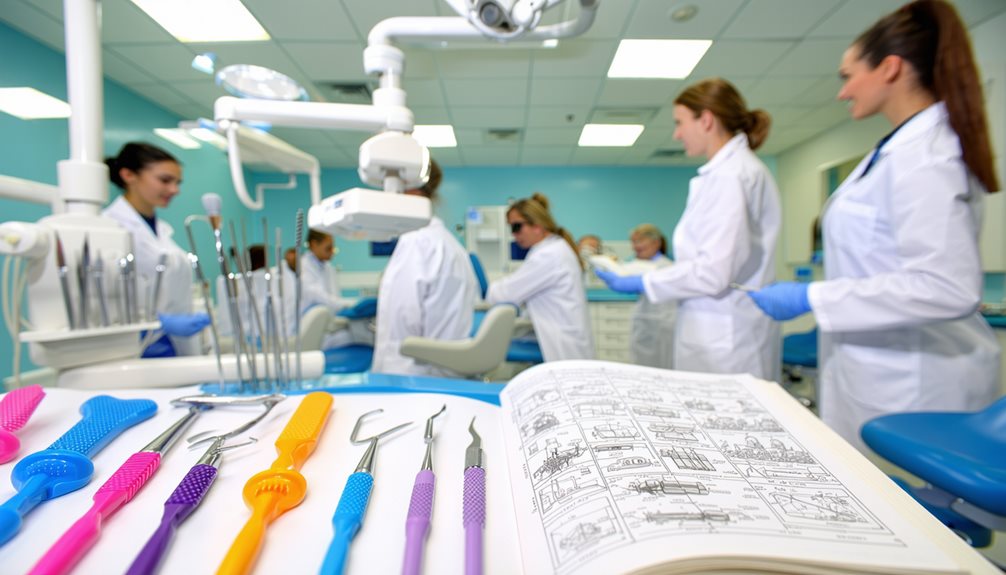
The ultimate resource for dental hygiene education encompasses a thorough understanding of fundamental concepts like plaque biofilm control and the impact of dietary habits. Accreditation by the Commission on Dental Accreditation (CODA) guarantees educational excellence and adherence to rigorous standards. Programs focus on developing essential competencies including infection control and proficient patient communication. Continuing education keeps professionals updated on innovative technologies and practices. Diverse career opportunities span clinical to research roles, with competitive compensation influenced by specialization and location. Selecting a program involves evaluating clinical training opportunities and accreditation status. Detailed exploration reveals integral elements for elevating patient care.
Understanding Dental Hygiene Fundamentals
Understanding the fundamentals of dental hygiene is essential, as it forms the foundation for maintaining oral health and preventing disease. Dental hygiene encompasses a thorough approach to preventive care, aiming to mitigate oral diseases before they manifest into more severe conditions.
Central to this discipline is the recognition of the intricate connection between oral health and overall systemic well-being. A proficient understanding of plaque biofilm control, meticulous plaque removal techniques, and the significance of dietary influences on oral health are pivotal components of this foundation.
The implementation of innovative preventive care methodologies is vital in advancing the efficacy of dental hygiene practices. These include the application of fluoride treatments, the strategic use of sealants, and the adoption of cutting-edge diagnostic tools to identify early signs of dental pathologies.
Additionally, patient education plays an integral role, empowering individuals to actively participate in their oral health maintenance through informed decision-making and adherence to recommended oral hygiene regimens.
As the field of dental hygiene continues to evolve, embracing technological advancements and evidence-based practices will enhance the capacity to prevent oral diseases. This proactive approach not only safeguards oral health but also contributes to improved quality of life, reflecting the dynamic and innovative nature of contemporary dental hygiene.
Accredited Dental Hygiene Programs
Accredited dental hygiene programs serve as the cornerstone for educating and training competent oral health professionals. These programs guarantee that curricula meet rigorous standards set by accrediting bodies, such as the Commission on Dental Accreditation (CODA). They provide a structured framework for delivering essential knowledge and skills necessary for effective patient care.
Program accreditation is a critical factor that assures quality education, reflecting a program’s commitment to excellence and continuous improvement.
Program rankings, often based on criteria such as faculty expertise, clinical facilities, and graduate success rates, serve as valuable tools for prospective students seeking innovative and top-tier educational experiences. High-ranking programs are typically characterized by cutting-edge research opportunities, state-of-the-art technology integration, and a focus on advancing oral health through evidence-based practice.
Students enrolled in accredited programs benefit from thorough training that includes didactic, laboratory, and clinical components, guaranteeing a well-rounded educational experience. This robust preparation is essential for maneuvering the complexities of oral health care and meeting the diverse needs of patients.
As the field of dental hygiene evolves, accredited programs remain pivotal in fostering the next generation of innovative, patient-centered dental hygienists who are equipped to contribute meaningfully to the profession.
Essential Skills for Dental Hygienists
Mastering the essential skills of a dental hygienist is crucial for delivering high-quality patient care and maintaining oral health. One fundamental skill is proficient patient communication, which involves not only explaining procedures but also educating patients on oral hygiene practices. Effective communication fosters trust and guarantees that patients are informed and engaged in their oral health journey.
This skill requires the ability to tailor information to suit individual patient needs, considering factors such as age, cultural background, and previous dental experiences.
Infection control is another critical skill, demanding meticulous adherence to protocols to prevent cross-contamination and guarantee a safe environment for both patients and healthcare providers. Dental hygienists must be adept at sterilizing instruments, donning appropriate personal protective equipment, and maintaining a clean operatory.
This vigilance in infection control safeguards against the transmission of pathogens and is fundamental to a hygienist’s role.
Additionally, dental hygienists should be adept in the use of innovative dental technologies, such as digital radiography and ultrasonic scalers, which enhance diagnostic accuracy and treatment efficiency.
Mastering these essential skills not only elevates patient care but also positions dental hygienists at the forefront of advancing oral healthcare practices.
Career Opportunities in Dental Hygiene
The domain of career opportunities in dental hygiene is expansive and diverse, offering professionals a wide array of paths to pursue. Dental hygienists, armed with technical expertise and patient care skills, can explore roles ranging from clinical positions to educational and administrative roles.
Clinical settings include private dental practices, public health facilities, and specialized clinics, where professionals focus on preventive care and patient education. These positions offer robust job prospects due to a consistent demand for oral health services, propelled by evolving healthcare needs and an aging population.
For those seeking innovative career pathways, opportunities exist in research, dental product development, and corporate roles within dental supply companies. Additionally, dental hygienists can shift into academia, contributing to the education and training of future professionals, or assume leadership roles in healthcare policy and advocacy, influencing industry standards and regulations.
Salary expectations in dental hygiene can vary based on geographic location, experience level, and specialization. However, the field generally offers competitive compensation, reflecting the specialized skill set and professional demand.
As healthcare continues to advance, the role of dental hygienists is poised for growth, providing a promising landscape for those invested in patient-focused oral health innovation.
Continuing Education and Certification
Continuing education in dental hygiene is essential for maintaining proficiency in the latest techniques and ensuring high standards of patient care.
Available course options range from specialized clinical procedures to advancements in dental technology, providing hygienists with the tools to enhance their practice.
To uphold licensure and certification, dental hygienists must adhere to specific renewal requirements, which often include a mandated number of continuing education hours.
Course Options Available
A diverse array of course options is available for dental professionals pursuing continuing education and certification, each tailored to enhance expertise and patient care skills. These options encompass both online learning and hybrid programs, providing flexible and innovative pathways to achieve professional development goals.
Online learning platforms offer cutting-edge modules designed to fit into the demanding schedules of dental professionals, enabling them to access high-quality content at their convenience. Such programs are meticulously curated, encompassing a thorough range of topics from advanced periodontal therapy to emerging technologies in dental practice.
Hybrid programs merge the convenience of online learning with hands-on clinical experiences, ensuring that practitioners not only acquire theoretical knowledge but also hone practical skills essential for ideal patient outcomes. These programs are particularly beneficial for those seeking to elevate their proficiency in specialized areas such as dental anesthesia or radiographic interpretation.
By integrating virtual and in-person components, hybrid courses foster a holistic learning environment that promotes both critical thinking and technical acumen.
As the landscape of dental hygiene continues to evolve, these diverse educational pathways empower dental professionals to remain at the forefront of innovation, ensuring they deliver superior care in an ever-changing healthcare landscape.
Certification Renewal Requirements
Steering through the requirements for certification renewal is essential to maintaining professional competence in dental hygiene. The certification process is designed to guarantee that dental hygienists remain current with evolving practices and technologies. Typically, the renewal timeline spans one to three years, depending on state regulations and the specific certifying body.
It is vital to adhere to this timeline to avoid lapses in certification, which can affect professional standing and patient care delivery.
The renewal process often mandates a specific number of continuing education units (CEUs), which serve as a benchmark for ongoing professional development. These CEUs should encompass current innovations in dental care, infection control protocols, and patient management strategies. Innovative courses that align with technological advancements and clinical techniques are highly recommended to enhance competency.
Additionally, understanding the detailed requirements of the certification process, including the documentation of completed CEUs and adherence to ethical standards, will facilitate a seamless renewal experience.
Dental hygienists should leverage online platforms and professional networks to access cutting-edge educational resources. By staying informed and proactive, dental hygienists can guarantee their skills remain relevant and aligned with the highest standards of dental care, ultimately enhancing patient outcomes.
Selecting the Right Dental Hygiene School
When selecting a dental hygiene school, it is imperative to evaluate the program’s accreditation status and adherence to curriculum standards set by relevant dental education authorities, ensuring thorough and up-to-date training.
Prospective students should assess the quality and scope of clinical training opportunities, as hands-on experience is essential for developing patient-centered care competencies.
Additionally, exploring available financial aid options can facilitate access to education, allowing students to focus on acquiring the skills necessary for a successful career in dental hygiene.
Accreditation and Curriculum Standards
Selecting the right dental hygiene school is essential, as it directly impacts the quality of education and future career prospects. A pivotal factor in this decision is a thorough understanding of the accreditation process and curriculum evaluation. Accreditation guarantees that a program meets rigorous educational standards, which are necessary for producing competent dental hygienists who can adeptly address the evolving needs of patient care.
The Commission on Dental Accreditation (CODA) is the authoritative body that evaluates these programs in the United States, ensuring they adhere to established guidelines and continuously innovate in their teaching methodologies.
Curriculum standards are equally critical in shaping a dental hygiene program’s effectiveness. An innovative curriculum should integrate foundational science with cutting-edge technology and evidence-based practices, enabling students to develop both technical skills and critical thinking capabilities.
This approach not only prepares students for immediate clinical roles but also equips them to adapt to future advancements in the field. As prospective students evaluate programs, they should seek those with a curriculum that emphasizes patient-centered care, adaptability, and a commitment to lifelong learning.
Clinical Training Opportunities
Clinical training opportunities are a fundamental aspect of dental hygiene education, complementing the theoretical knowledge gained through accredited curricula. Selecting the right dental hygiene school involves evaluating the depth and breadth of hands-on experience provided. Integral to this process are mentorship programs, which pair aspiring dental hygienists with seasoned professionals, fostering an environment of learning and growth.
Such programs are instrumental in refining clinical skills, connecting the gap between classroom instruction and real-world application. Schools that prioritize innovative clinical training often incorporate cutting-edge technology and diverse patient interaction into their programs. By doing so, they guarantee students are adept at utilizing advanced dental tools and techniques, preparing them for a dynamic healthcare landscape.
The integration of simulation labs, for example, allows students to perfect their skills in a controlled yet realistic environment before moving on to live patient care. Moreover, a robust mentorship program enhances professional development by offering personalized guidance, critical feedback, and career insights.
This relationship not only enhances technical proficiency but also cultivates soft skills, such as patient communication and empathy. Consequently, when selecting a dental hygiene school, prospective students should prioritize institutions that offer thorough clinical training and mentorship opportunities, assuring they are well-equipped for future challenges in dental care.
Financial Aid Options
Maneuvering the financial aid landscape is a vital component of selecting the right dental hygiene school, as it directly impacts a student’s ability to manage educational expenses without undue financial burden. Understanding the available financial aid options can empower students to make informed decisions.
Scholarship opportunities are a significant consideration. They provide merit-based or need-based financial assistance, reducing the dependence on loans and alleviating long-term financial stress. Identifying schools with robust scholarship programs can greatly influence overall education affordability.
Loan forgiveness programs are another remarkable aspect. These programs offer a pathway to financial relief for students who commit to serving in designated underserved areas upon graduation. By choosing schools that participate in these innovative programs, students can strategically plan their future careers while minimizing debt.
In contemplating these financial aid considerations, aspiring dental hygienists should be mindful of:
- The transformative potential of scholarships****, opening doors to education without the weight of financial constraints.
- The promise of loan forgiveness, inspiring graduates to serve communities in need while easing their financial obligations.
- The importance of proactive financial planning****, securing a future where passion for dental hygiene is not overshadowed by financial concerns.
Careful evaluation of these options fosters a sustainable educational journey.
Frequently Asked Questions
What Are the Best Study Resources for Dental Hygiene Exams?
For ideal dental hygiene exam preparation, employ practice exams to simulate testing conditions and enhance proficiency. Collaborate in study groups to foster peer learning and innovation, ensuring a thorough understanding of patient care principles and technical competencies.
How Can I Manage Stress During Dental Hygiene School?
Managing stress during dental hygiene school can be achieved through mindfulness techniques and leveraging peer support. Incorporating meditation and time management strategies enhances focus, while collaborative study groups provide emotional support and innovative problem-solving.
Are There Scholarships Available for Dental Hygiene Students?
Scholarship opportunities for dental hygiene students abound, with numerous funding resources available through academic institutions, professional associations, and private foundations. These financial aids can alleviate educational expenses, fostering innovation and excellence in patient-focused dental care practices.
What Are Some Effective Time Management Tips for Dental Hygiene Students?
Effective time management for dental hygiene students involves developing structured study schedules and prioritizing tasks. This approach guarantees focused learning, enhances patient care proficiency, and fosters innovative thinking by allocating time efficiently to both academic responsibilities and clinical practice.
How Do I Balance Clinical Practice and Academic Studies in Dental Hygiene?
Balancing clinical practice and academic studies in dental hygiene requires strategic integration of clinical experience with effective study strategies, prioritizing patient-focused learning while utilizing innovative scheduling techniques and technology to optimize both theoretical understanding and practical application in real-world settings.
Conclusion
Ultimately, a thorough understanding of dental hygiene fundamentals is vital for aspiring dental hygienists, facilitated by accredited programs that guarantee quality education. Mastery of essential skills is paramount for effective practice, opening diverse career opportunities within the dental field. Commitment to continuing education and certification enhances professional growth and guarantees adherence to evolving industry standards. Selecting the right dental hygiene school is imperative for acquiring the necessary knowledge and skills, ultimately contributing to improved patient care and oral health outcomes.