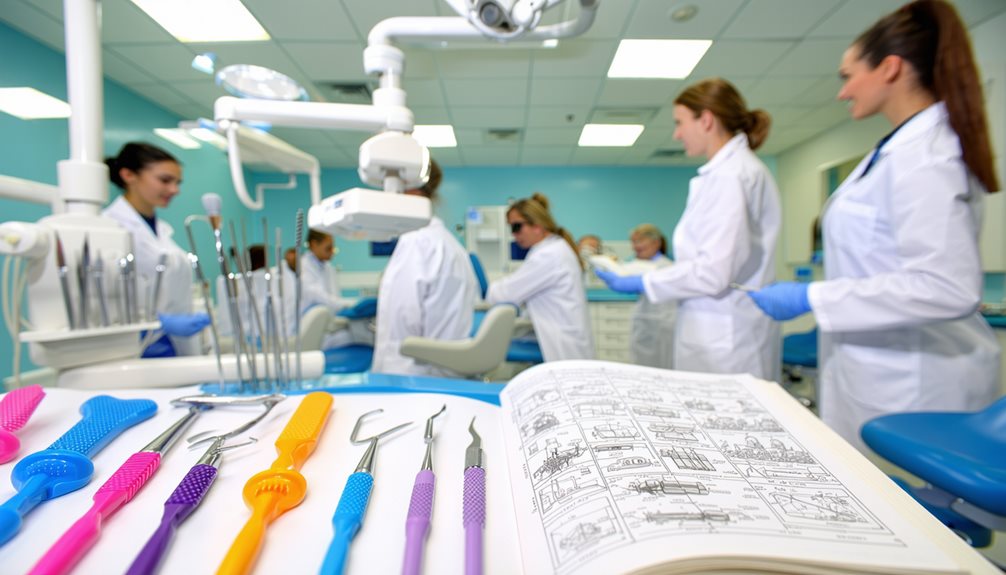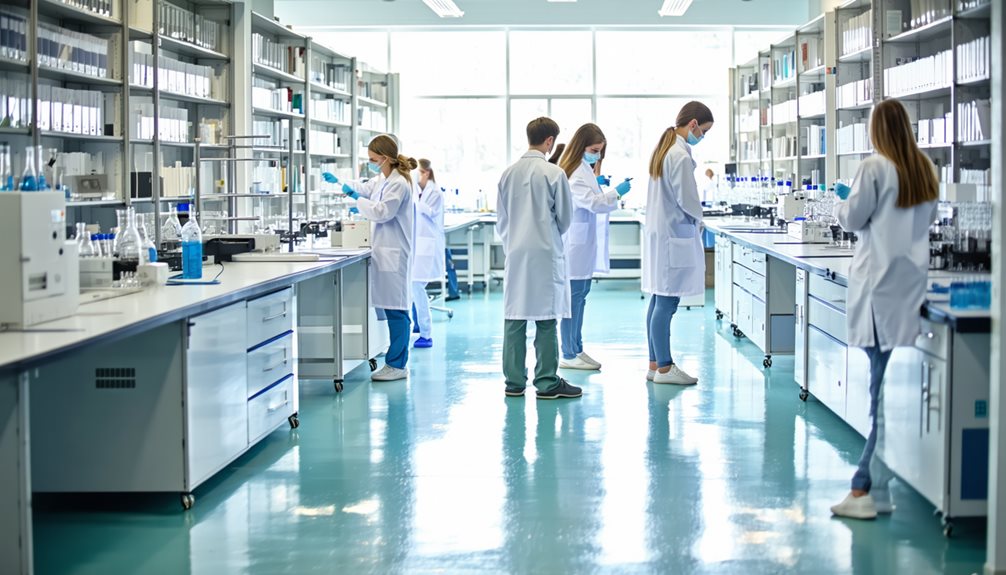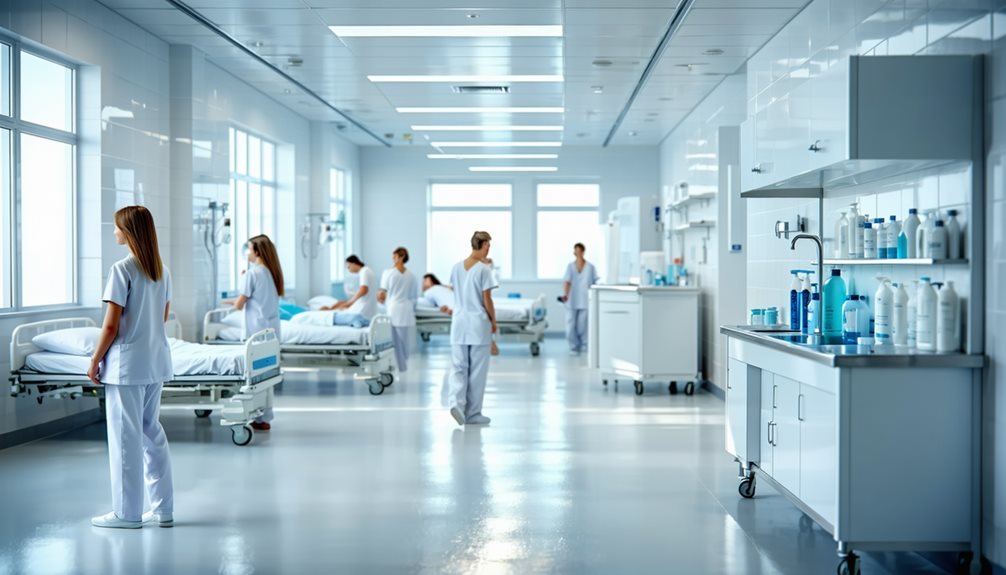
Top programs emphasizing hygiene and patient care blend innovative curricula with practical training to cultivate competent healthcare professionals. These programs employ reality and simulation technologies, integrating virtual reality and realistic scenarios to enhance technical proficiency and hygiene practices. They focus on patient-centered learning, utilizing empathy-driven curricula to improve caregiver interactions and patient outcomes. Students gain real-world experience through hands-on clinical practice, internships, and mentorship from seasoned practitioners. Interactive teaching and the flipped classroom model foster critical thinking and communication skills. Community engagements and digital platforms further extend learning, offering deeper insights into extensive care and public health initiatives.
Comprehensive Curriculum Overview
In developing a detailed curriculum for hygiene and patient care programs, it is crucial to focus on integrating both theoretical knowledge and practical skills to secure a well-rounded education. This integration is pivotal in guaranteeing that students are not only able to understand the foundational concepts of hygiene and patient care but also apply these concepts in real-world scenarios.
Curriculum integration involves a strategic approach to combining various subjects and skills, thereby allowing students to perceive connections between different disciplines.
Interdisciplinary collaboration is a cornerstone of this curriculum design, fostering an environment where students learn to work alongside professionals from various fields. This collaboration enriches the learning experience by exposing students to diverse perspectives and methodologies, thereby preparing them for a multifaceted healthcare environment.
Programs that emphasize interdisciplinary collaboration often see students gaining proficiency in critical thinking, problem-solving, and adaptability—skills that are indispensable in the rapidly evolving healthcare sector.
Moreover, a thorough curriculum overview should include continuous evaluation and updates to remain aligned with current industry standards and innovations. This guarantees that the program not only meets educational objectives but also exceeds in preparing students for the dynamic demands of healthcare professions.
Cutting-Edge Clinical Training
While advancements in healthcare technology continue to shape the future of medical practice, cutting-edge clinical training is essential for preparing students to meet these evolving challenges. Training programs that integrate advanced technology equip future healthcare professionals with the skills necessary to operate complex medical devices and software. Simulations using virtual reality (VR) and augmented reality (AR) are increasingly employed to create realistic clinical scenarios, allowing students to hone their technical skills without risk to patients.
Interdisciplinary collaboration is another cornerstone of state-of-the-art clinical training programs. These programs bring together students from diverse medical disciplines, fostering a thorough understanding of patient care that extends beyond traditional boundaries. Through collaborative projects and integrated case studies, students learn to function as part of a cohesive healthcare team, enhancing both their communication skills and clinical acumen.
Moreover, these training programs emphasize the importance of data analytics and electronic health records, ensuring that students are proficient in handling the digital aspects of modern medicine. By incorporating these cutting-edge elements, clinical training programs not only prepare students to adapt to technological advancements but also to lead innovation in patient care.
This forward-thinking approach is vital in developing healthcare professionals who are both competent and visionary.
Patient-Centered Learning Approaches
Patient-centered learning approaches in hygiene and patient care programs emphasize interactive training methods that engage healthcare professionals in real-world scenarios.
By incorporating empathy-driven curricula, these programs aim to enhance caregivers’ ability to understand and respond to patients’ needs effectively.
Such approaches are designed to foster a more holistic understanding of patient care, ultimately improving patient outcomes and satisfaction.
Interactive Training Methods
Recognizing the evolving needs of healthcare, interactive training methods have emerged as an essential component of patient-centered learning approaches. These methods enhance the practical skills of healthcare professionals by integrating role playing scenarios and digital simulations, thereby fostering a robust understanding of clinical environments.
Interactive training methods offer significant advantages:
-
Role Playing Scenarios: This technique allows trainees to engage in realistic patient interactions, which helps in honing their communication and decision-making skills while preparing them for unexpected situations.
-
Digital Simulations: By providing a virtual platform, digital simulations enable healthcare professionals to practice and refine their technical skills in a risk-free environment, thereby improving patient safety and care outcomes.
-
Feedback Mechanisms: Immediate feedback is a fundamental component of interactive methods, allowing trainees to understand their strengths and areas for improvement, thereby facilitating a continuous learning process.
-
Adaptability: These methods are adaptable to various learning styles, ensuring that all participants can benefit from personalized training experiences.
Employing such innovative strategies in training programs not only enhances the competency of healthcare professionals but also aligns with the overarching goal of delivering patient-centered care.
Empathy-Driven Curriculum
Building upon the foundation of interactive training methods, the incorporation of an empathy-driven curriculum further strengthens patient-centered learning approaches. This innovative educational strategy prioritizes the cultivation of empathy development and emotional intelligence among healthcare practitioners. By integrating these elements, programs can enhance the interpersonal skills necessary for effective patient care.
Empathy development is central to this curriculum, as it enables healthcare professionals to understand and share the feelings of patients, thereby fostering trust and improving therapeutic relationships. Studies indicate that when practitioners demonstrate high levels of empathy, patient satisfaction and adherence to medical advice considerably increase. This correlation underscores the importance of embedding empathy training into healthcare education.
Moreover, the focus on emotional intelligence equips practitioners with the capacity to manage their own emotions and respond appropriately to the emotional needs of their patients. The ability to navigate complex emotional interactions is essential in high-stakes environments such as hospitals and clinics, where stress and emotional burdens are prevalent.
The implementation of an empathy-driven curriculum represents a forward-thinking approach in healthcare education, ensuring that future professionals are not only clinically proficient but also emotionally attuned, thereby improving patient outcomes and fostering a more humane healthcare system.
Innovative Teaching Techniques
Incorporating innovative teaching techniques into hygiene and patient care programs is essential for advancing the skills and competencies of healthcare professionals. These methods foster a dynamic learning environment, vital for adapting to the rapidly evolving medical landscape. Active learning and collaborative projects play pivotal roles in this transformation. By shifting from traditional lecture-based teaching to interactive methodologies, programs can enhance student engagement and retention.
-
Active Learning: This approach encourages students to participate actively in the learning process through discussions, problem-solving, and case studies, promoting critical thinking and application of knowledge.
-
Collaborative Projects: By working in teams, students develop communication and interpersonal skills, necessary for effective patient care. These projects simulate real-world scenarios, thereby improving decision-making abilities.
-
Technology Integration: The use of digital tools such as virtual reality and simulation software provides immersive experiences, allowing students to practice hygiene and patient care scenarios in a controlled, risk-free environment.
-
Flipped Classroom: This model reverses traditional learning by having students review lecture material at home and engage in hands-on activities during class, reinforcing concepts through practice and discussion.
These innovative techniques equip future healthcare professionals with the skills necessary to excel in modern clinical settings.
Hands-On Practice Opportunities
Hands-on practice opportunities are integral to hygiene and patient care programs, providing students with essential real-world clinical experience.
These programs often include simulation lab training, allowing learners to refine their skills in a controlled, risk-free environment.
Additionally, internships and externships facilitate direct patient interaction, bridging the gap between theoretical knowledge and practical application.
Real-World Clinical Experience
The integration of real-world clinical experience is an essential component in the education of healthcare professionals, offering invaluable practical skills that bridge theoretical knowledge with patient care. This hands-on approach fosters a deeper understanding of patient interactions and hones fundamental skills under the guidance of seasoned practitioners.
Clinical mentorship is a cornerstone of this experience, providing students with insights that enhance their ability to deliver competent and compassionate care.
To explore the benefits of real-world clinical experience, consider the following aspects:
-
Enhanced Learning: Direct patient interactions enable students to apply theoretical concepts in complex, dynamic environments, reinforcing their knowledge and building confidence.
-
Skill Development: Engaging in varied clinical settings allows learners to develop a broad range of skills, from technical procedures to interpersonal communication, essential for holistic patient care.
-
Professional Growth: Clinical mentorship offers personalized feedback and guidance, fostering critical thinking, problem-solving abilities, and professional development.
-
Adaptability and Innovation: Exposure to diverse healthcare scenarios encourages adaptability, inspiring innovative approaches to patient care and hygiene practices.
Simulation Lab Training
Simulation lab training offers an essential foundation for healthcare education, providing hands-on practice opportunities that mirror real-world clinical scenarios. These labs simulate diverse situations, from routine procedures to emergency interventions, allowing students to engage in realistic patient care without risk. The inclusion of high-fidelity mannequins and advanced technology facilitates an immersive learning environment. These tools replicate human responses, enabling students to practice clinical reasoning and decision-making in a controlled setting.
Simulation scenarios are meticulously designed to challenge students and promote active learning. These scenarios often integrate interdisciplinary approaches, requiring collaboration among students from different healthcare disciplines. This fosters communication skills and prepares students for the complexities of actual patient care.
In addition, these simulated experiences are instrumental in honing technical skills and enhancing procedural proficiency.
Skill assessment within simulation labs is essential for evaluating student competence. It provides immediate feedback, allowing learners to reflect on their performance and identify areas for improvement. The use of objective metrics guarantees a standardized evaluation process, contributing to improved educational outcomes.
As healthcare continues to evolve, simulation lab training remains pivotal in producing skilled professionals ready to navigate the demands of modern medical practice.
Internships and Externships
Building upon the foundational skills acquired in simulation labs, internships and externships provide invaluable real-world clinical experiences that deepen students’ understanding of patient care. These hands-on practice opportunities allow participants to shift theoretical knowledge into practical expertise, essential for those aspiring to excel in hygiene and patient care disciplines.
Internship benefits are manifold, offering students a structured environment where they can gain proficiency in essential clinical tasks. They also foster professional growth by allowing students to work alongside experienced practitioners, thereby gaining insights into best practices.
Externship experiences, while often shorter, provide exposure to diverse healthcare settings, enriching students’ adaptability and problem-solving skills.
To further illustrate the impact of these opportunities, consider the following:
-
Skill Application: Internships enable students to apply theoretical concepts learned in classrooms, enhancing their clinical acumen and decision-making capabilities.
-
Professional Networking: Both internships and externships offer avenues for students to build professional relationships, which can be pivotal for career advancement.
-
Feedback and Evaluation: Real-time feedback from mentors helps students refine their skills and address areas needing improvement.
-
Exposure to Innovation: By engaging with cutting-edge technologies and methodologies, students remain at the forefront of evolving healthcare practices.
These experiences are integral to cultivating a robust foundation in hygiene and patient care.
Community Engagement Initiatives
Often, successful community engagement initiatives are crucial in enhancing the effectiveness of hygiene and patient care programs. By fostering robust community outreach, these initiatives align public health goals with local needs, ensuring that interventions are both culturally relevant and broadly accepted.
Analyzing data from various regions, it is evident that targeted engagement strategies considerably improve public health outcomes, such as reducing infection rates and increasing adherence to hygiene protocols. For instance, community health workshops and participatory forums empower local populations to voice concerns and contribute to health solutions, creating a collaborative environment that bolsters trust and accountability.
Moreover, innovative community engagement models often employ technology to amplify their reach and impact. Digital platforms facilitate real-time feedback and continuous education, thereby bridging gaps in traditional communication channels.
By leveraging mobile applications and social media, programs can deliver timely updates and health alerts, enhancing their responsiveness to emerging public health challenges. Additionally, these initiatives frequently partner with local organizations and leaders to tailor interventions that address specific community dynamics, thereby fostering a sense of ownership and long-term commitment.
Collectively, these strategies underscore the transformative potential of community engagement in advancing hygiene and patient care.
Frequently Asked Questions
What Are the Career Prospects After Completing These Programs?
Career prospects after such programs are promising, with job opportunities in diverse healthcare settings. Salary expectations vary based on specialization and region, but typically reflect growing demand for skilled professionals focused on innovation in patient care and hygiene standards.
How Do These Programs Accommodate Working Professionals or Part-Time Students?
These programs cater to working professionals and part-time students by offering flexible scheduling and online classes. This approach supports continued professional development, allowing individuals to balance educational pursuits with existing occupational and personal responsibilities effectively.
Are There Scholarship Opportunities Available for Students in These Programs?
Various scholarship types, including merit-based and need-based, are available for students. Funding sources often include governmental grants, private foundations, and institutional aid, fostering innovation by alleviating financial barriers and attracting diverse, talented individuals to these programs.
What Are the Prerequisites for Enrolling in These Hygiene-Focused Programs?
The prerequisites for enrolling include meeting specific program requirements and admission criteria such as academic qualifications, relevant coursework, and potentially an interview process. Prospective students should demonstrate a commitment to innovative practices in hygiene and patient care.
How Do These Programs Integrate Technology Into the Learning Experience?
These programs effectively integrate technology by utilizing virtual simulations and interactive tools, enhancing experiential learning. This approach fosters practical skill development and innovative problem-solving, preparing students for dynamic healthcare environments through immersive, technology-driven educational experiences.
Conclusion
In examining top programs that prioritize hygiene and patient care, it becomes evident that a thorough curriculum integrating cutting-edge clinical training and patient-centered learning is essential. Innovative teaching techniques and abundant hands-on practice opportunities further enhance the educational experience. Additionally, community engagement initiatives play an important role in preparing students to address diverse patient needs effectively. Collectively, these elements contribute to the development of healthcare professionals who are well-equipped to deliver high-quality care in various clinical settings.